

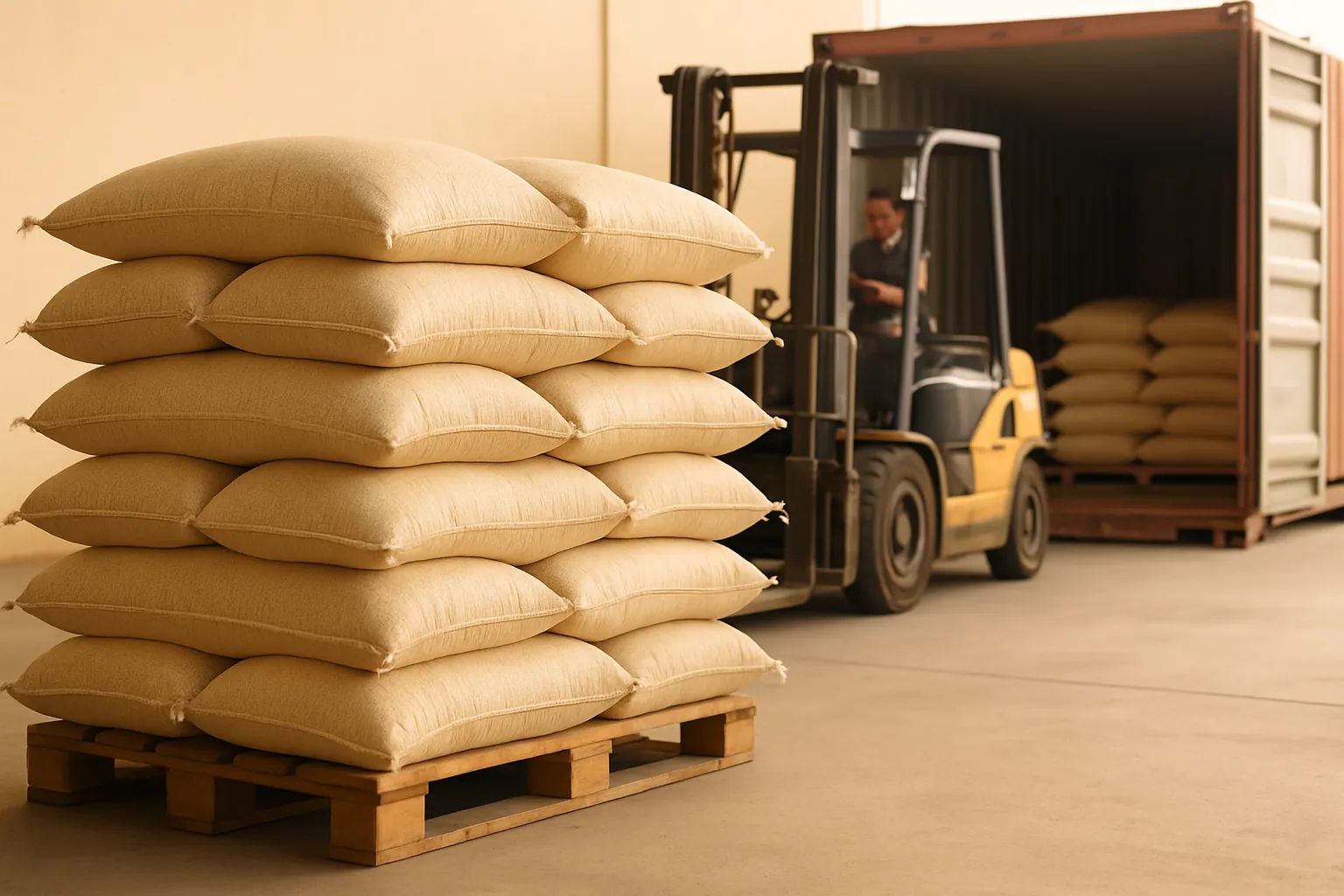
Sesame ships in woven polypropylene bags of 25 or 50 kilograms, loaded into 20-foot containers that carry around 19 to 20 metric tons — or in 1 MT FIBC jumbo bags for mills that tip bulk. A lot can be perfectly cleaned and fully lab-certified at despatch and still arrive in poor condition; the difference is logistics. How seed is bagged, loaded and documented decides whether the quality measured in Tanzania is the quality a buyer receives weeks later at the destination port.
PP bags or jumbos: choosing a format
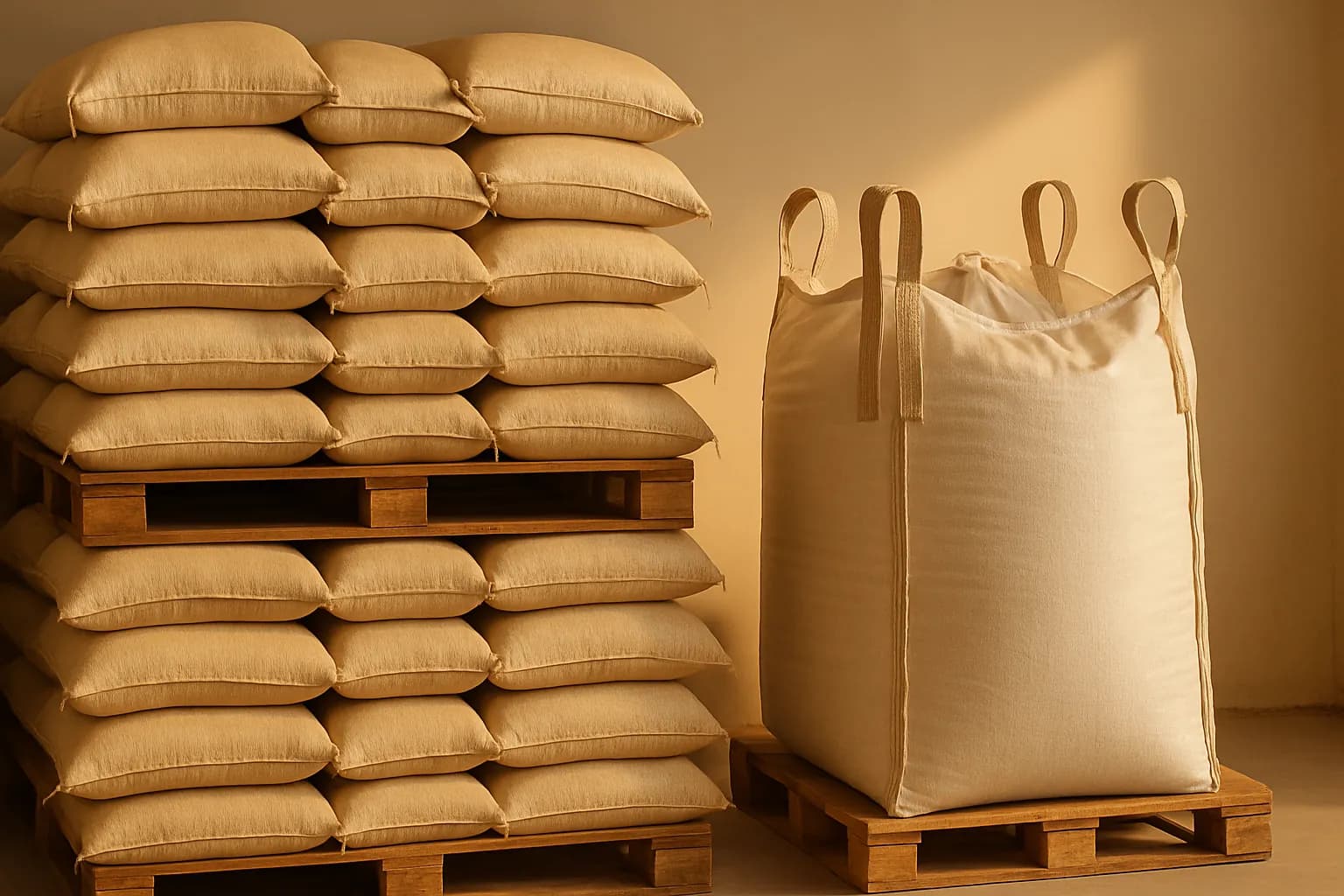
The 25/50 kg woven PP bag is the trade standard — breathable, stackable, and sized for warehouses that move stock by hand or pallet. Jumbo bags earn their place at industrial intake points: a tahini mill or crushing plant with a hoist and a tipping station handles one 1 MT bag in the time it would handle forty small ones, with less bag waste and faster container turnaround. The seed and the lot documentation are identical; the choice is purely about what happens at your receiving dock. Hulled roasted sesame is the exception — it ships in 10 or 25 kg cartons with food-grade liners, because roasted seed is a ready-to-use ingredient and is handled like one.
Loading against condensation
The enemy in transit is not rough handling but water. A container loaded warm at a tropical port and cooled over a three-week voyage will condense moisture on its ceiling and walls — 'container rain' — and sesame bagged at a safe 6 per cent can arrive caked if that water finds the cargo. We line containers with kraft paper, fit desiccant strips sized to the route, keep bags clear of the container walls, and load in dry conditions only. A longer, cooler-destination leg gets stricter protection than a short Gulf run.
Ports and transit lanes from Tanzania
Our primary gateway is Dar es Salaam Port, Tanzania's main commercial port, with Mtwara Port loading southern lots grown in Lindi and Mtwara. Typical transit times: the Persian Gulf in 10 to 14 days, the Indian subcontinent in 14 to 21 days, Southeast Asia in 21 to 28 days, and northern Europe in 30 to 35 days, depending on routing and transshipment. We quote FOB by default, with CIF and CFR available on request.
“Quality is not just made at the cleaning line. It is preserved — or lost — in the container. A careful load is the last quality-control step before the buyer sees the goods.”
- Daniel Mahenge, Logistics Coordinator
Documentation a buyer should expect
- Commercial invoice and a detailed packing list with lot numbers.
- Certificate of origin and the phytosanitary certificate.
- Laboratory reports tied to the shipped lots — purity, oil content, FFA, moisture, aflatoxin, and salmonella screening where the destination requires it.
- Bill of lading and full container loading details.
- Processing and certification references (TBS) on request.
For a wholesale buyer, two habits make the biggest difference. Agree the bag format and net weights in the contract rather than assuming them, and confirm the documentation set early so customs clearance is never the delay. Done well, logistics is invisible — the seed simply arrives dry, in spec, on time, and ready for your line.
Related reading
Leave a Comment
Your email address will not be published.