
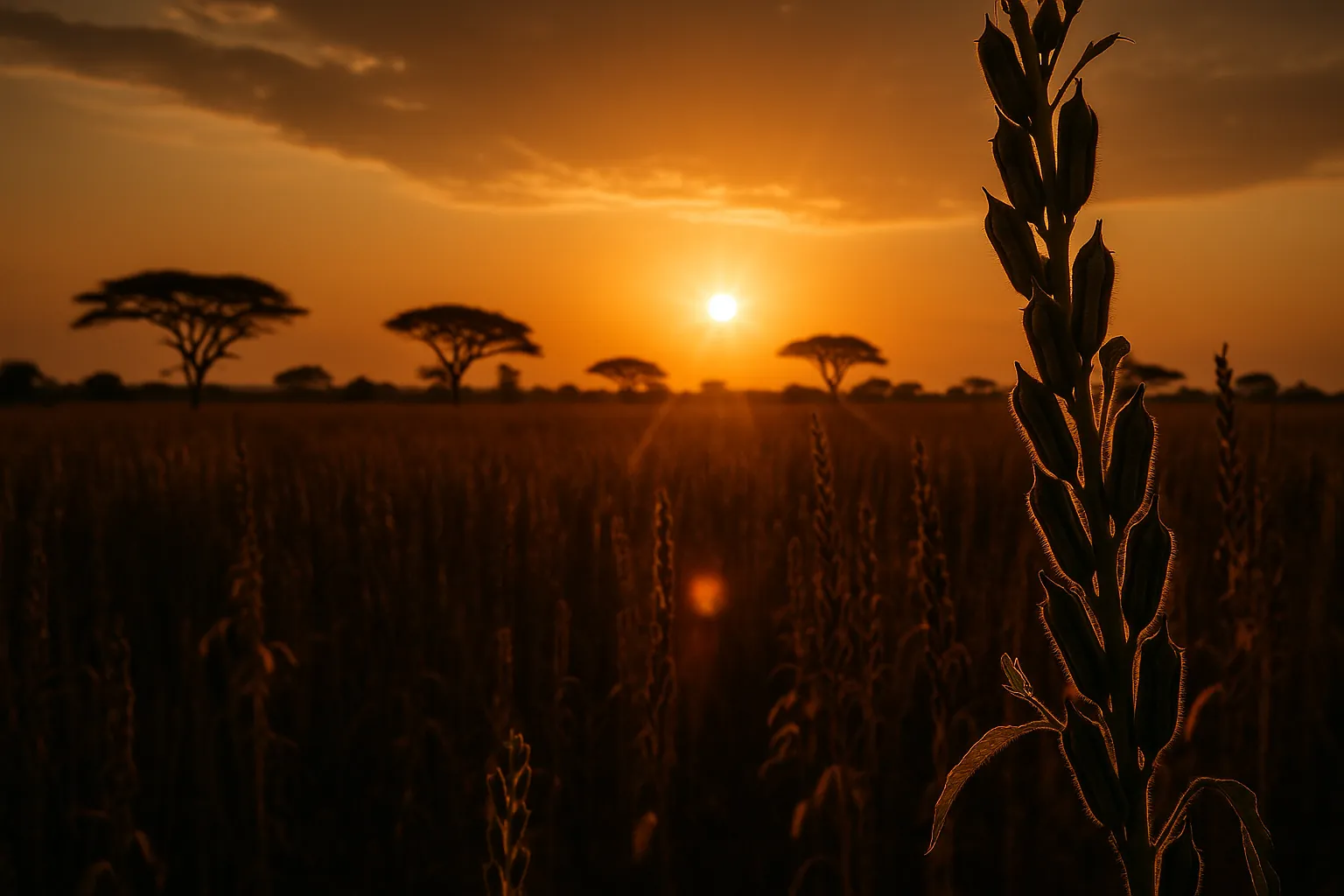
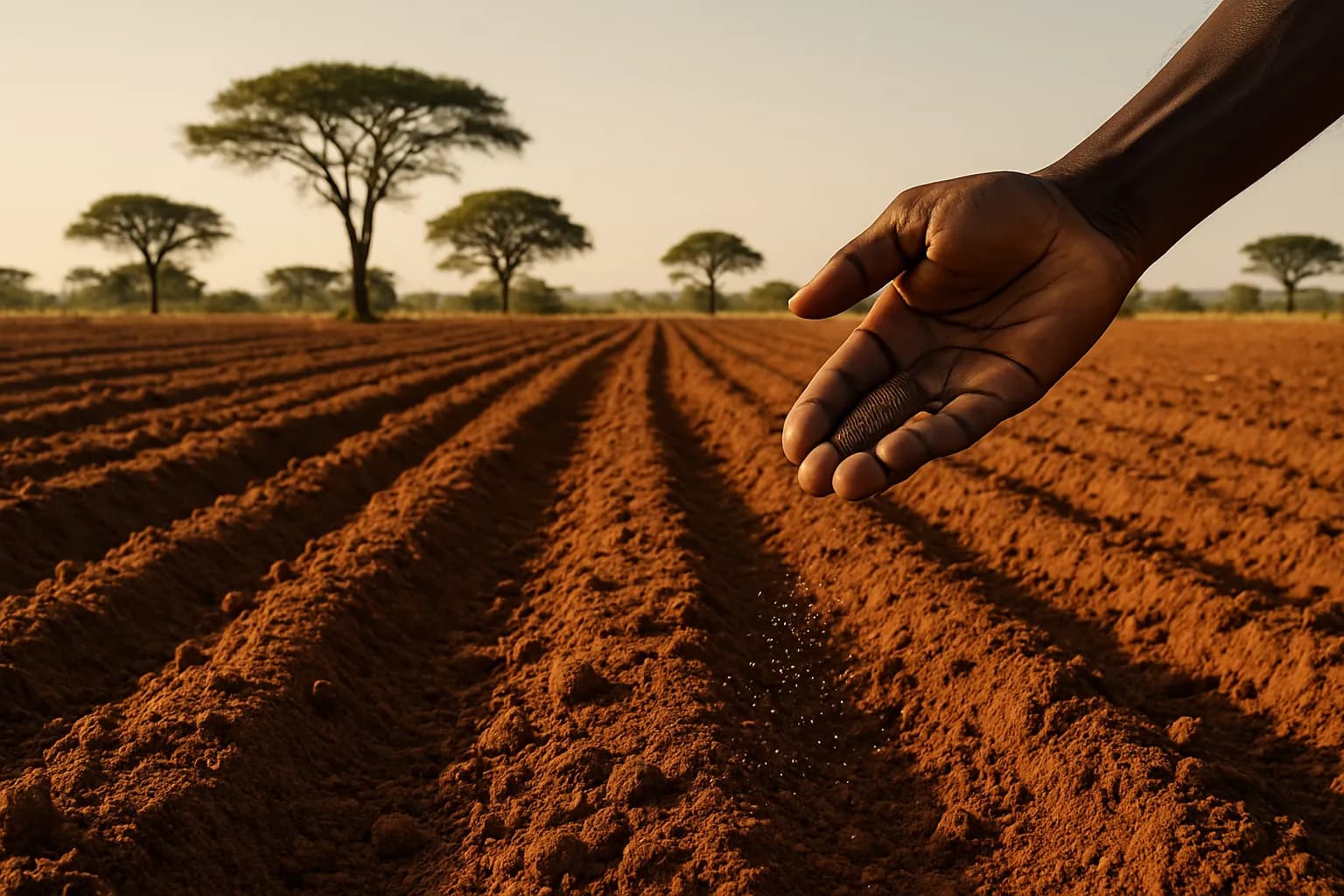
Tanzania's sesame season runs on the rains. Sowing begins in December and continues through February as the seasonal rains establish across the central and southern growing belt — Dodoma, Singida, Morogoro, Lindi and Mtwara — and the crop comes to harvest from May through August as the dry season sets in. Sesame is a short-cycle crop, roughly 90 to 120 days from sowing to cutting, and almost all of Tanzania's production is rain-fed and grown by smallholder farmers. Knowing where a lot sits in that cycle tells a buyer a great deal about the seed they are about to receive.
Sowing with the rains
Sesame is one of the most drought-tolerant oilseeds in cultivation, but it is unforgiving about two things: waterlogging and cold. Growers wait for the rains to establish before broadcasting or row-planting on light, well-drained soils. In the central belt around Dodoma and Singida, sowing typically lands between late December and early February; the southern districts of Lindi and Mtwara follow their own rainfall pattern within the same window. A clean, even establishment is the first signal of a good lot — patchy germination shows up months later as uneven maturity and mixed seed colour at the cleaning line.
The growing months
Through February, March and April the crop flowers and sets capsules progressively up the stalk — sesame is indeterminate, so the bottom capsules mature while the top of the plant is still flowering. This habit is what makes harvest timing a judgement call rather than a date on a calendar. Rainfall through the growing months feeds oil accumulation in the seed; the bold, high-oil lots that crushers pay premiums for come out of seasons where the rains held steady through capsule fill and then stopped cleanly.
Harvest: cut, stook, thresh
Sesame capsules shatter when fully dry — left too long in the field, the crop quite literally pours its value onto the ground. So harvest is a two-stage discipline. From May onwards, growers cut the plants when the lower capsules begin to yellow and open, before the stalk is fully dry. The cut plants are tied into bundles and stood upright in stooks to finish drying in the sun for one to two weeks. Once the capsules have opened, the bundles are inverted and shaken or beaten over tarpaulins, and the seed rains out clean.
“The stook is where the season is won or lost. Cut too late and the field takes its share; thresh onto bare soil and the cleaning line pays for it. Good sesame is mostly good handling.”
- Joachim Mbwana, Sourcing Lead
Threshing hygiene is the quality moment buyers never see. Seed threshed over clean tarpaulins carries little soil, sand or stone into the supply chain; seed beaten out over bare ground picks up the admixture that cleaning must later remove. We work with grower groups on exactly this point — tarpaulins, raised stooks and immediate collection — because every kilogram of foreign matter avoided in the field is purity gained in the bag.
Drying to a safe six per cent
After threshing, the seed is sun-dried until moisture sits at 6 per cent or below — measured with meters at intake, not estimated by hand. That threshold matters twice over: it is the level at which sesame stores safely without mould risk, and it is the specification importers write into contracts. Seed bagged wet is the root cause of most quality failures in the trade — caking, off-odours, rising free fatty acid and, in the worst cases, mould growth in transit.
What season timing tells a buyer
- Early-harvest lots (May–June) come off fields that dried first — typically clean, well-cured seed with strong colour.
- Mid-season volume (June–July) is highest, giving the most flexibility on contract sizing and grade selection.
- Late lots (August) need closer moisture checks — a wet end to the season can leave seed slow to cure.
- A season where rains stopped cleanly usually delivers higher oil content; a ragged end to the rains flattens it.
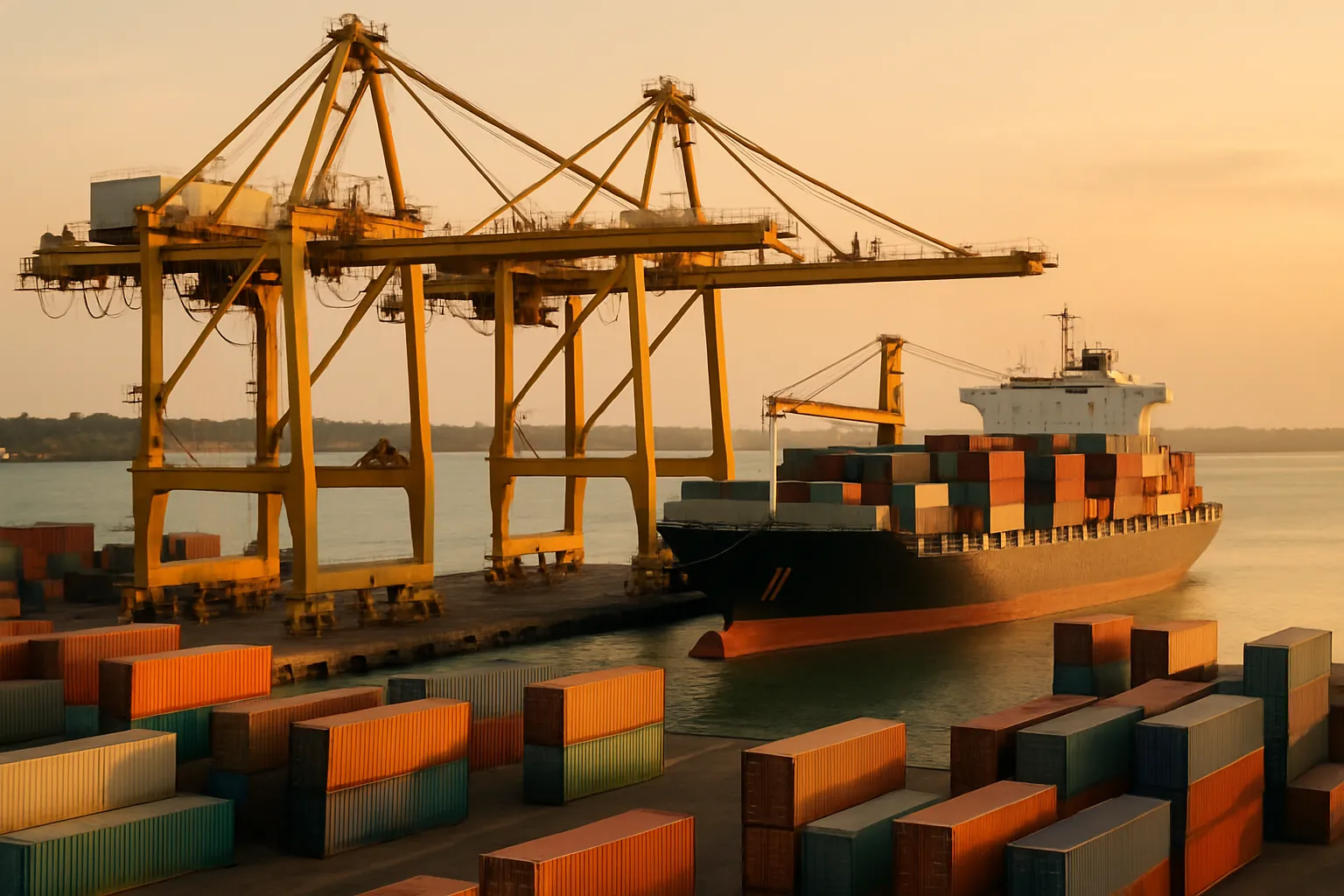
- Peak export volume moves in Q3 and Q4, once the crop is threshed, dried, cleaned and bagged.
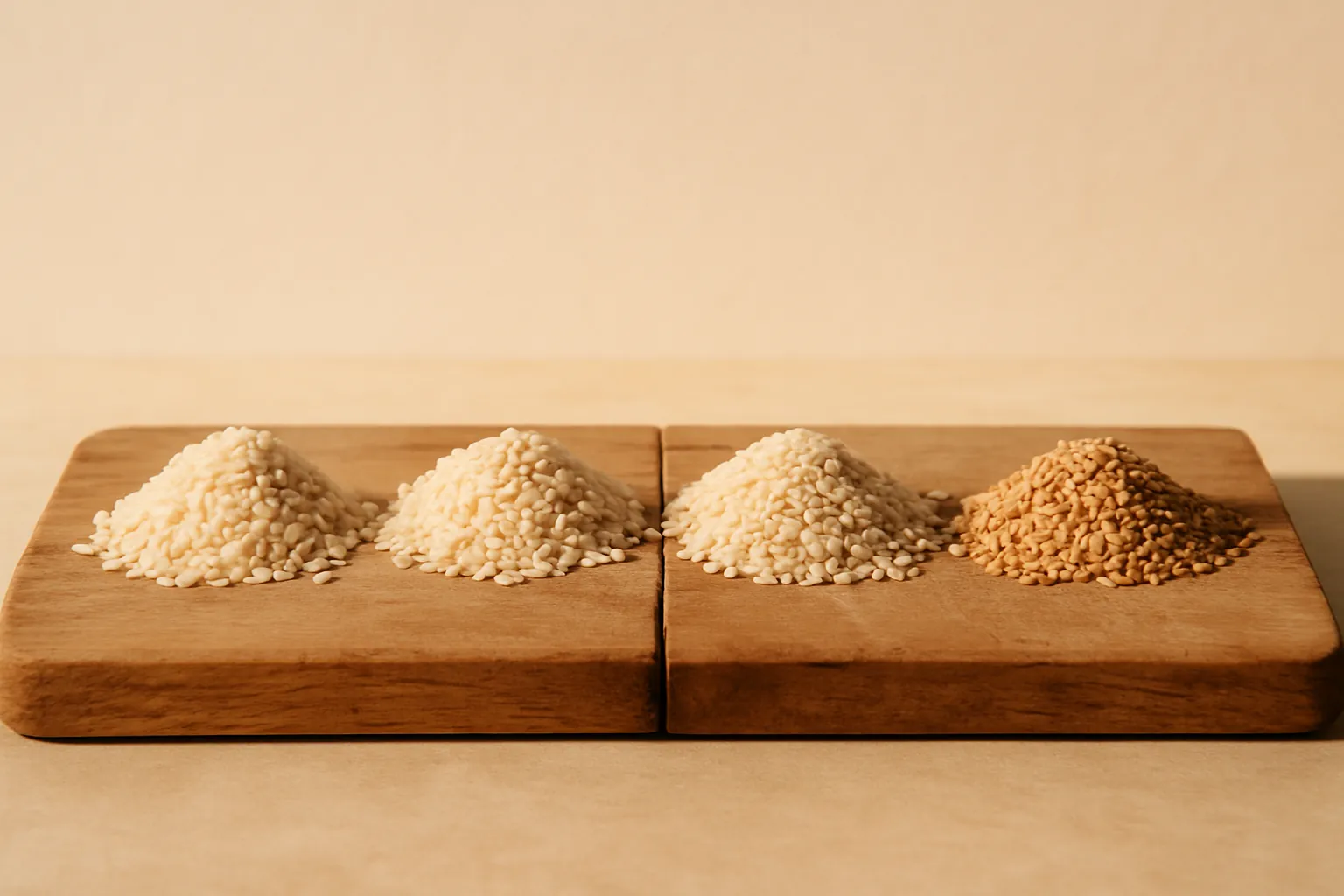
For an importer, the practical takeaway is that a single label of 'Tanzanian sesame' covers different seed across one season. Sourcing with district and date-of-harvest detail lets us match a specific lot to a buyer's purity, colour and oil-content expectations — and gives the traceability that serious food-safety programmes now require.
Related reading
Leave a Comment
Your email address will not be published.