

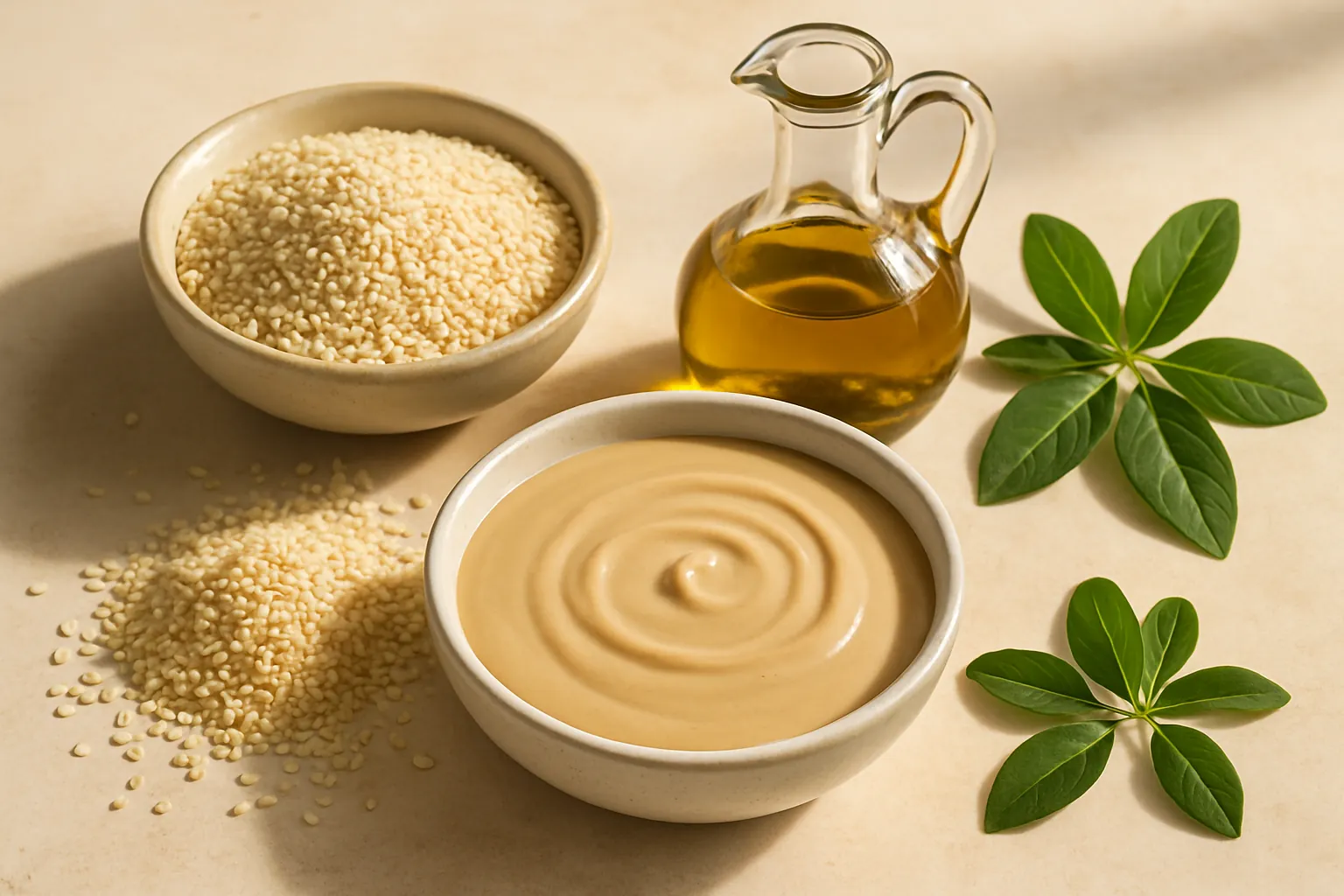
A 30-gram serving of sesame seeds provides roughly 170 calories, around 5 grams of plant protein, and a fat profile split almost evenly between monounsaturated and polyunsaturated fats — alongside notable levels of calcium, copper, magnesium, iron and zinc. But what sets sesame apart from other oilseeds is a family of compounds found in commercial quantity almost nowhere else: the sesame lignans. For manufacturers and brands, understanding what the seed offers helps shape honest product claims and position sesame-based lines where shoppers are already looking.
The lignans: sesamin, sesamolin and sesamol
Sesamin and sesamolin are lignans — polyphenolic compounds — that occur naturally in sesame oil, with sesamol formed from sesamolin during roasting and refining. They have two commercially relevant properties. First, they are antioxidants, and a substantial body of published research has examined their effects on lipid metabolism and oxidative stress. Second, and more practically for product developers, they are a large part of why sesame oil resists rancidity better than most oils of comparable polyunsaturated content. The seed effectively ships with its own preservative system.
Calcium — and the hull question
Whole natural sesame is one of the richest plant sources of calcium, at roughly 900 to 1,000 milligrams per 100 grams — but the location of that calcium matters for buyers. Most of it sits in the hull, largely as calcium oxalate. Hulled sesame therefore carries a fraction of the calcium of natural seed, though what remains is in a more available form and the hull's slight bitterness goes with it. A brand leading on calcium content should build on natural seed; a brand leading on taste and smoothness will choose hulled and should quote the lower figure honestly.
The oil profile
Sesame seed is 48 to 54 per cent oil, and the oil is roughly 40 per cent oleic (monounsaturated) and 40 per cent linoleic (polyunsaturated) acid, with vitamin E present mainly as gamma-tocopherol. That balance, protected by the lignans, gives sesame oil its unusual shelf stability and its standing in both cuisine and cosmetics. It is also why oil content is the number crushers price on — every extra percentage point of oil in the seed is yield at the press.
“Sesame is one of the few ingredients where the nutrition story survives fact-checking. The lignans are real, the calcium is real, the minerals are real — the work is quoting them for the right seed form.”
- Neema Kessy, Nutrition & Editorial Lead
Minerals and protein
- Copper — sesame is among the best food sources; a 30 g serving covers a large share of daily needs.
- Magnesium and zinc — meaningful contributions per serving, supporting muscle, nerve and immune function claims.
- Iron — notable in natural seed, relevant for plant-forward and flexitarian positioning.
- Protein — around 18–20% of the seed by weight, rich in methionine, which complements legume-based proteins.
- Fibre — natural (unhulled) seed contributes several grams per serving.
Building products around sesame
Tahini is the anchor application — hulled, roasted, stone- or steel-milled into paste, and the base of halva, hummus, dressings and a fast-growing category of spreads. Beyond it: bakery and burger-bun toppings, sesame snaps and confectionery, seed-and-nut bars, gomashio and furikake seasonings, plant-based milks, and cold-pressed or toasted oils. One regulatory note product teams cannot skip: sesame is a recognised major allergen in a growing list of jurisdictions, including the United States (since 2023) and the EU, so labelling and cross-contact controls are mandatory. Used responsibly, the seed gives a brand a rare combination — a nutrient story that holds up to scrutiny and a flavour that needs no defending.
Related reading


Leave a Comment
Your email address will not be published.