

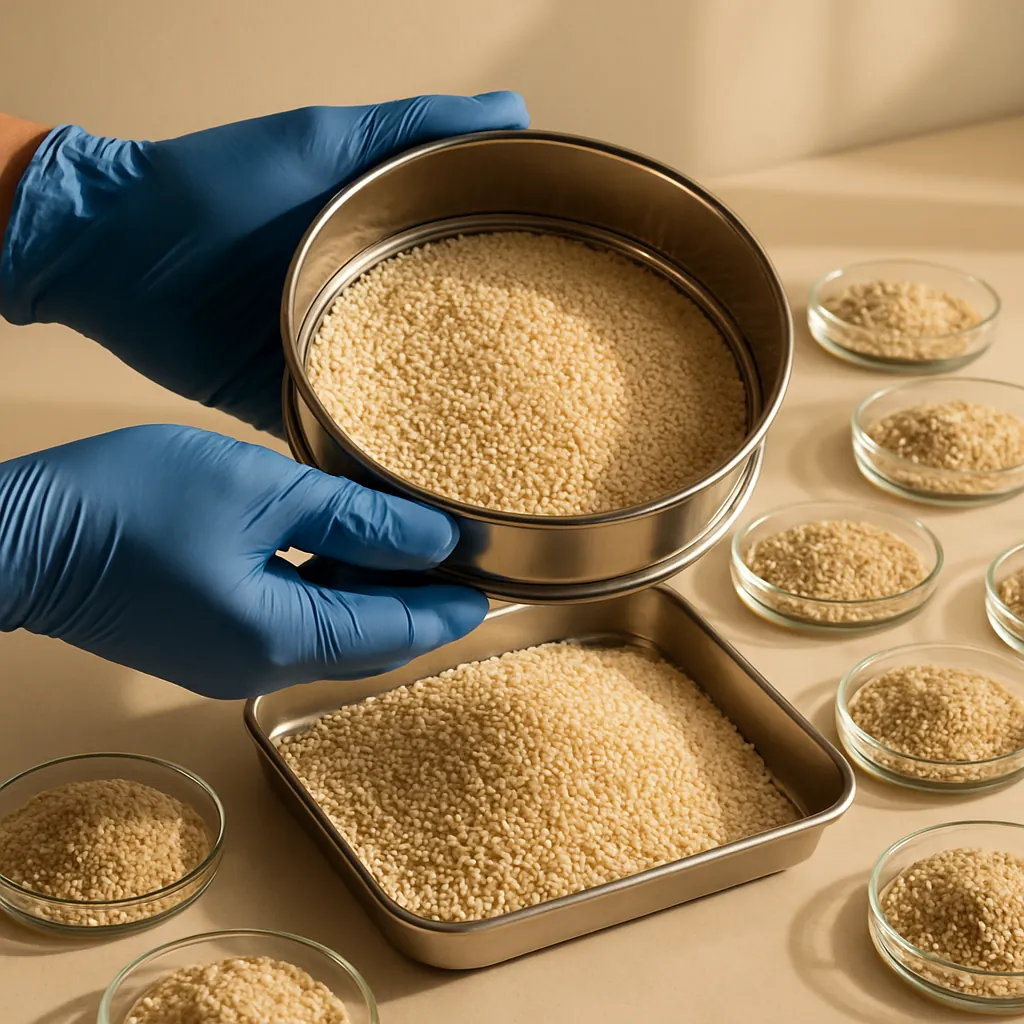
A sesame intended-use specification records what the buyer plans to make, the seed form requested, the destination and the next processing step. Put those details alongside the order reference and the contacts who can answer outstanding questions before sending an enquiry to a supplier or processor.
Use this guide to organise correspondence. Confirm testing questions with your own laboratory and destination requirements with the relevant regulator. This article and its blank record do not determine product classification, treatment suitability, compliance or whether a lot is safe to use.
1. Describe the intended application
Write the application in plain language: sesame for tahini manufacture, for example, or seed intended for a bakery topping. State the product form requested and describe the planned next step without adding a treatment claim. If the application is undecided, write that down and identify the buyer contact who will confirm it.
Include the destination country and importer contact. Keep the buyer’s description separate from any answer received from a laboratory or regulator. Record who supplied each answer, when it arrived and which enquiry it concerns; leave unanswered questions open.
2. Find the official destination guidance
Australia’s Department of Agriculture, Fisheries and Forestry publishes a sesame import page and directs importers to BICON for current import conditions. Consult those sources and ask the Australian regulator which conditions apply to your goods. This guide does not assign a ready-to-eat classification or interpret exclusions.
Australian official source
Canada’s CFIA notice of April 7, 2025 addresses importer responsibilities for sesame seeds, tahini and halva, including preventive controls, supplier evidence and traceability. Read the notice in full for a Canadian enquiry, and confirm requirements with CFIA. No supplier or lot is assessed by this article.
Canadian official source
These are destination-specific references, checked on November 3, 2026. For another market, obtain that destination’s official guidance. Save the source URL and access date in the enquiry record so the next person can find the same reference.
3. Keep documents and questions identifiable
Ask the supplier which documents are available for the proposed enquiry. List the document title, issuer, date and any order or lot reference shown. If a reference is absent or unclear, record a question rather than filling the gap yourself. Send laboratory questions to your own lab and regulatory questions to the destination regulator.
Keep this correspondence record separate from supplier approval and laboratory-report comparison. Those are different buyer tasks covered in the linked guides. This record simply keeps the application, contacts and outstanding replies together.
Related buyer task
Related buyer task
4. Blank enquiry handoff record
Copy the fields below into an enquiry file. They are an optional correspondence aid created for this guide, not an official form or a safety checklist. Keep answer cells blank until the relevant contact replies. A completed record is not approval to use or release a lot.
Enquiry / order reference: ____________________
Lot reference, if supplied: ____________________
Intended application: ____________________
Requested sesame form: ____________________
Destination country and importer contact: ____________________
Planned next processing step, as described by buyer: ____________________
Supplier contact: ____________________
Processor contact, if known: ____________________
Available document titles, dates and references: ____________________
Official guidance URL and access date: ____________________
Open question: ____________________
Person or organisation asked: ____________________
Reply due date: ____________________
Reply reference, sender and date: ____________________
Outstanding follow-up: ____________________
5. Send an enquiry the next person can follow
Send the application, requested form, destination and enquiry reference together. Attach or identify the documents already received and list the questions still awaiting answers. Ask the recipient to identify the enquiry in their reply. If the destination or application changes, update the record and tell the contacts handling those questions.
For a commercial enquiry, describe the sesame product you need and ask what documentation is available. Do not describe a proposed treatment as an Afri Exports capability on the basis of this guide. Confirm technical questions with your own laboratory or regulator before relying on an answer for your purchase or process.
Commercial enquiry
What belongs in a sesame intended-use enquiry?
Record the intended application, requested seed form, destination, next processing step, enquiry reference and contacts. List open questions separately and record the replies received.
Does the handoff record confirm that sesame is safe to use?
No. The record organises correspondence and does not approve a lot, process or import route. Confirm testing questions with your own laboratory and destination requirements with the relevant regulator.
Related reading
Leave a Comment
Your email address will not be published.