

At a glance
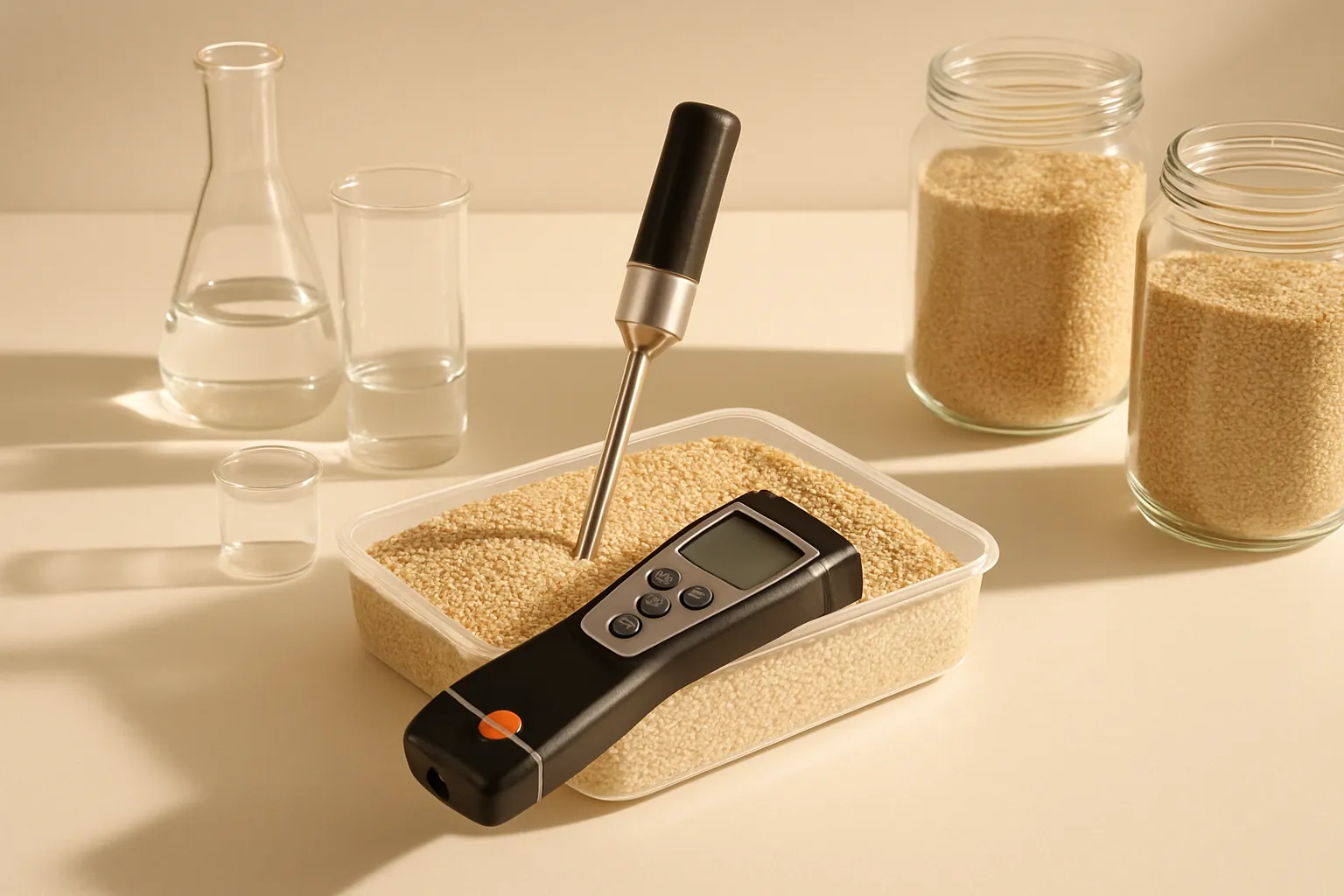
- The tahini input is hulled white sesame — the seed coat is what makes paste darker, specked and faintly bitter.
- Ask for: hulled white, 99.98% purity, oil 50–54%, FFA ≤2% as oleic, moisture ≤6%, admixture ≤0.02%, uniform pale colour and a sieve-graded seed size.
- Oil content is the commercial lever — the more oil in the seed, the more paste each tonne makes and the less added oil the batch needs.
- Colour is inherited: off-colour seed, hull fragments and admixture carry straight through the mill into the finished paste.
- FFA is your shelf-life proxy. Seed that arrives near the ceiling has already spent part of the paste's life.
- Roast evenness follows seed size and moisture — mixed sizes and over-dried seed scorch and under-colour in the same batch.
- Per-lot Salmonella and aflatoxin screening plus district-level traceability are what your own audit file needs from the seed side.
- Buying pre-hulled moves yield loss, water and drying off your plant; hulling in-house buys control at the cost of capital, effluent and an optical sorter.
Tahini is one of the few manufactured foods where the raw material is very nearly the whole recipe. Roasted sesame goes into the mill and paste comes out, so almost everything a customer notices in the finished jar — colour, bitterness, viscosity, shelf life — was settled at the moment the seed was bought. That makes sourcing a production decision rather than a purchasing one, and it is why paste plants specify sesame far more tightly than bakeries or seasoning blenders do. This guide is written for whoever signs that specification: what to ask for, why each number is on the sheet, and where the real commercial argument sits.
What sesame is used to make tahini?
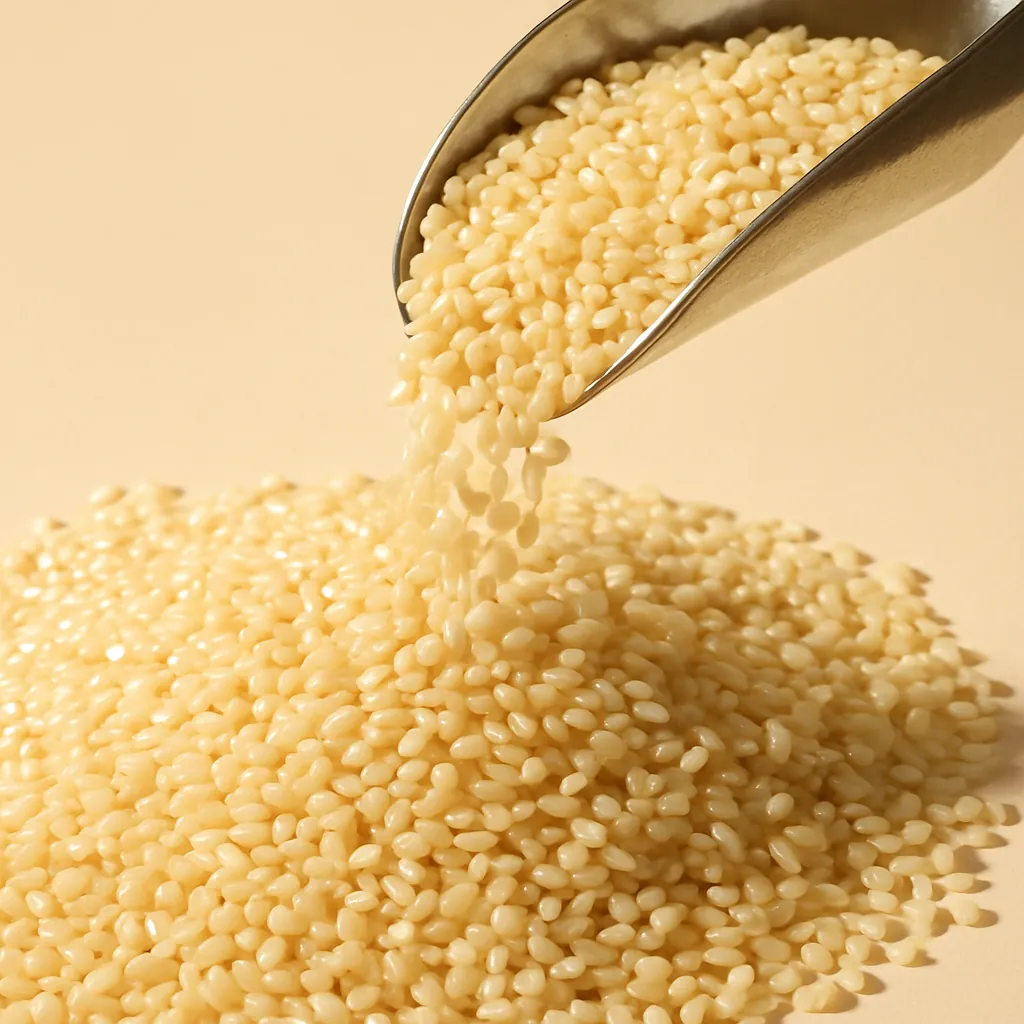
Hulled white sesame. The seed coat carries the fibre, the darker tone and the slight bitterness, and none of it improves in a grinder — leave the hull on and it mills through into the paste as visible specks, a duller colour and a background bitterness the recipe then has to work around. Take it off and the kernel is paler, milder and slightly higher in oil. That is why smooth commercial tahini runs on hulled seed, and why our hulled white grade — 99.98 per cent purity, 50 to 54 per cent oil, admixture at 0.02 per cent — is the line most paste makers quote against. The exception is traditional stone-milled tahini, where a fuller flavour is the point and natural or sortex-cleaned natural seed is the right buy; our natural versus hulled guide covers that fork in general terms.
Why does oil content matter for tahini yield?
Because oil is not an additive in tahini — it is the seed's own liquid phase, the thing that turns ground kernel into a pourable paste. Higher oil content generally means more paste per tonne of seed, a looser grind and less pressure to rescue a stiff batch with oil bought in, which costs money and complicates a single-ingredient label. We will not publish a yield figure — that depends on your roast, your grind and your target viscosity. What belongs in the contract is the input side: our hulled white assays 50 to 54 per cent oil, natural white 48 to 52 per cent and bold oil-grade seed 52 to 54 per cent. Tanzanian sesame's reputation rests on the upper half of those ranges, but buy on a per-lot assay rather than an origin average — the assay is the only version of the number that arrives in the container.
What decides the colour of the finished paste?
Colour is inherited, not created. The roast develops the tone, but the starting point is the seed, and nothing downstream removes a defect that came in through the gate. Dark and off-colour seed, hull fragments left by a careless dehulling line and the dust-stone-and-fragment category the trade files under admixture all pass through the mill and surface as specks, or as a paste reading a shade browner than the batch before it — and for a brand whose customers put two jars side by side, that drift generates more complaints than any single dramatic defect. The specification answer is purity plus optical sorting: hulled white at 99.98 per cent with admixture at 0.02 per cent, or sortex-cleaned natural white at 99.95 per cent where you start from natural seed. Screen colour at intake against a retained pre-shipment sample — at the grinder, the only remaining option is to blend the problem away.
Should I buy hulled seed or hull it myself?
Both positions are defensible; what is already installed usually decides. Larger plants across Turkey and the Levant often hull in-house, because dehulling is where a paste maker gains the most control — they set the soak, the abrasion and the drying curve, and they buy natural seed at a lower cost per tonne. What it costs is capital and utilities: a wet dehulling line, water and effluent handling, a drying step that brings the kernel back down without cooking it, and an optical sorter to clear hull fragments. Buying pre-hulled moves all of it off your site and turns it into a line item, along with the weight loss — hulling discards roughly 8 to 10 per cent of the seed's weight, which our natural versus hulled guide sets out with the rest of the cost stack. The rule of thumb: feed an existing dehulling line with natural or sortex natural seed; if dehulling is a project rather than a plant, buy hulled and spend the capital on your roast and mill.
How do seed size and moisture affect the roast?
Roasting is where uniformity stops being cosmetic. Colour development follows the heat each seed takes on, so a batch mixing bold and small seed finishes with some kernels scorched and others pale — all of it going into the same paste. Moisture behaves the same way: seed arriving wet steams before it toasts and drags the profile, while over-dried seed colours fast and tips into burnt notes before the rest of the batch catches up. So a tahini specification should carry a sieve-graded size range next to the moisture ceiling, and 6 per cent maximum moisture sits in our contracts across every grade. Ask for the size distribution of the lot being quoted, not just the grade name: two suppliers can both sell honest hulled sesame and hand you very different roast behaviour.
Where do hummus manufacturers fit?
Most hummus plants buy finished tahini, because the paste is one input among several and milling it is a separate discipline. The larger operations mill their own from seed to control cost and flavour, and when they do the sourcing sheet looks almost identical to a tahini producer's, with two shifts of emphasis. Colour matters more, because hummus is a pale product and a browner paste drags the whole tub with it. And mildness matters more, because the sesame should support the chickpea rather than argue with it — which pushes the choice firmly towards hulled seed.
What quality gates belong in a tahini contract?
Salmonella is the first food-safety question on most paste sourcing sheets, and it should be — screening negative per lot, tested on the shipped seed, is not a nice-to-have for a low-moisture ready-to-eat product. Aflatoxin is screened against your destination market's limits, which differ by jurisdiction. FFA is capped at 2 per cent as oleic at despatch and moisture at 6 per cent maximum. Then comes the part buyers forget until an audit lands: traceability. Your own auditors will ask where the seed came from, and a supplier who can only answer at country level makes that conversation harder than it needs to be. Our position, plainly: cleaning, sortex, storage and bagging run under Tanzania Bureau of Standards certification, every export lot is laboratory-analysed before despatch, and every container is tied to named growing districts and a defined harvest window. Those are the credentials we hold; if your scheme requires one we do not, we will say so before you build a file around us.
The tahini-grade specification, summarised
- Form — hulled white sesame for smooth commercial tahini; sortex-cleaned natural white for traditional stone-milled styles or for plants that dehull in-house.
- Purity — 99.98% for hulled with admixture at 0.02% maximum; 99.95% for sortex natural with admixture at 0.05%.
- Oil content — 50–54% for hulled, 48–52% for natural white, assayed per lot rather than quoted as an origin average.
- FFA — 2% maximum as oleic acid at despatch, tested on the shipped lot.
- Moisture — 6% maximum, for transit safety and for a predictable roast.
- Colour — uniform pale kernel, with the tolerated share of off-colour seed written into the contract and a retained pre-shipment sample to check against.
- Seed size — a sieve-graded range agreed in writing, so the roast colours evenly across the batch.
- Food safety — Salmonella screening negative per lot, aflatoxin tested against the limits of your destination market.
- Traceability — each container tied to named Tanzanian growing districts and a defined harvest window, with lot records your auditors can follow.
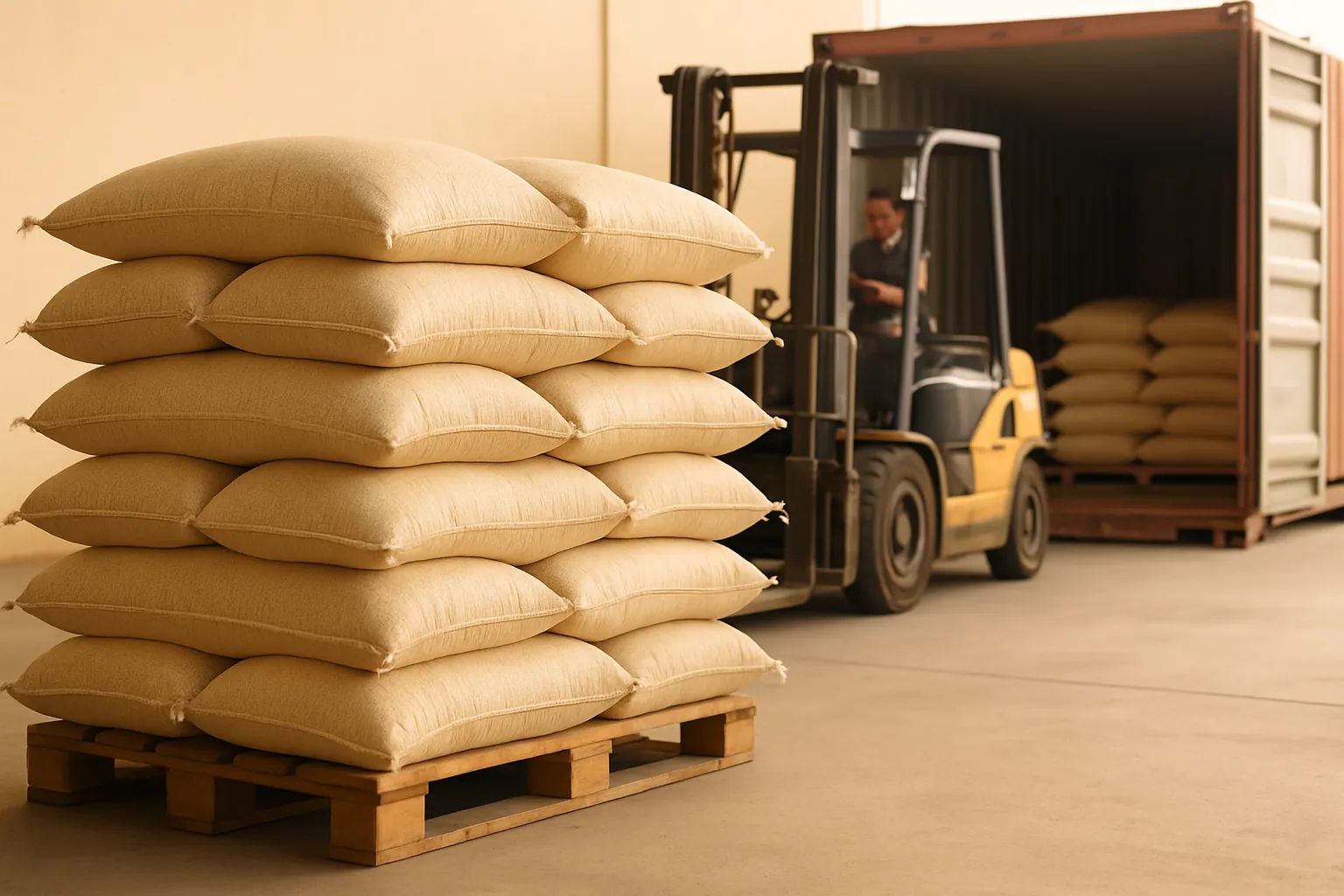
- Packing — 25 or 50 kg woven polypropylene bags, or 1 MT FIBC jumbos where the intake tips bulk; roughly 19–20 MT in a 20-foot container.
“A paste plant is not really buying seed by the tonne — it is buying oil, colour and shelf life, and the tonne is only how they arrive. Buy on the lot assay, not the origin average.”
- Joachim Mbwana, Sourcing Lead
What to send us for a tahini-grade quote
- The product — smooth commercial tahini, halva, a traditional stone-milled line, or a certified-organic line.
- Whether you dehull in-house or want hulled seed delivered ready to roast.
- Your minimum oil content, and your maximum FFA and moisture.
- Your seed size range, if the roaster is set for one.
- First order volume and the expected monthly or seasonal offtake.
- Destination port and the Incoterm you work on.
- The certificates and test reports your QA file needs to travel with the documents.
- Packing format — 25/50 kg bags or 1 MT jumbos.
With that we quote the relevant grades side by side — same origin, same documentation — so the oil difference and the hulling premium are both visible before you commit a container, and we draw a representative sample across the lot for your mill to run first. If another form or another origin genuinely suits your line better, we would rather say so than sell you a specification your product cannot use.
Grades and guides for paste manufacturers
- Wholesale sesame seeds supplier overview- grades, MOQ, testing and shipping in one place
- Hulled White Sesame Seeds- 99.98% · oil 50–54% · the tahini grade
- Sortex Natural White Sesame 99.95%- For stone-milled styles and in-house dehulling
- Natural White Sesame Seeds 99%- 99/1/1 · oil 48–52%
- Oil-Grade Sesame Seeds (Bold)- 52–54% oil — built for the press, not the paste
- Natural vs hulled sesame: a buyer's guide- The hulling decision and the cost stack behind it
- Sesame quality: FFA, moisture & aflatoxin- How the food-safety numbers are tested and held
- Request a tahini-grade quote- Send the paste style, volume and destination port
Related reading
Leave a Comment
Your email address will not be published.