
At a glance
- Production sits in a warm belt across Africa and Asia — Sudan, India, Myanmar, Tanzania, Nigeria, China and Ethiopia are consistently named among the largest growers.
- African origins supply a large share of the seed that actually crosses borders; much of Asia's crop is eaten, crushed or hulled at home.
- China is the dominant single importer by volume. Japan, Turkey, South Korea, Israel, the EU and the United States buy the specification-driven tiers above the bulk crushing market.
- India is the outlier that is both a major grower and the trade's deepest processor of hulled seed.
- Tanzania sits consistently among Africa's largest producers, and its calling card is oil content and clean natural white seed harvested May to August.
- Exact tonnages and ranks move every season and are revised after the fact. Treat any leaderboard as directional and check current-season trade data before committing to a figure.
'Who grows the most sesame?' sounds like a question with one clean answer. It is not. Sesame is a rain-fed smallholder crop across most of its growing belt, harvests swing hard with the weather, and the countries that grow the most are frequently not the ones that sell the most. What follows is a market map rather than a leaderboard: who grows, who exports, who buys, and where Tanzanian seed sits inside it.
Which countries produce the most sesame?
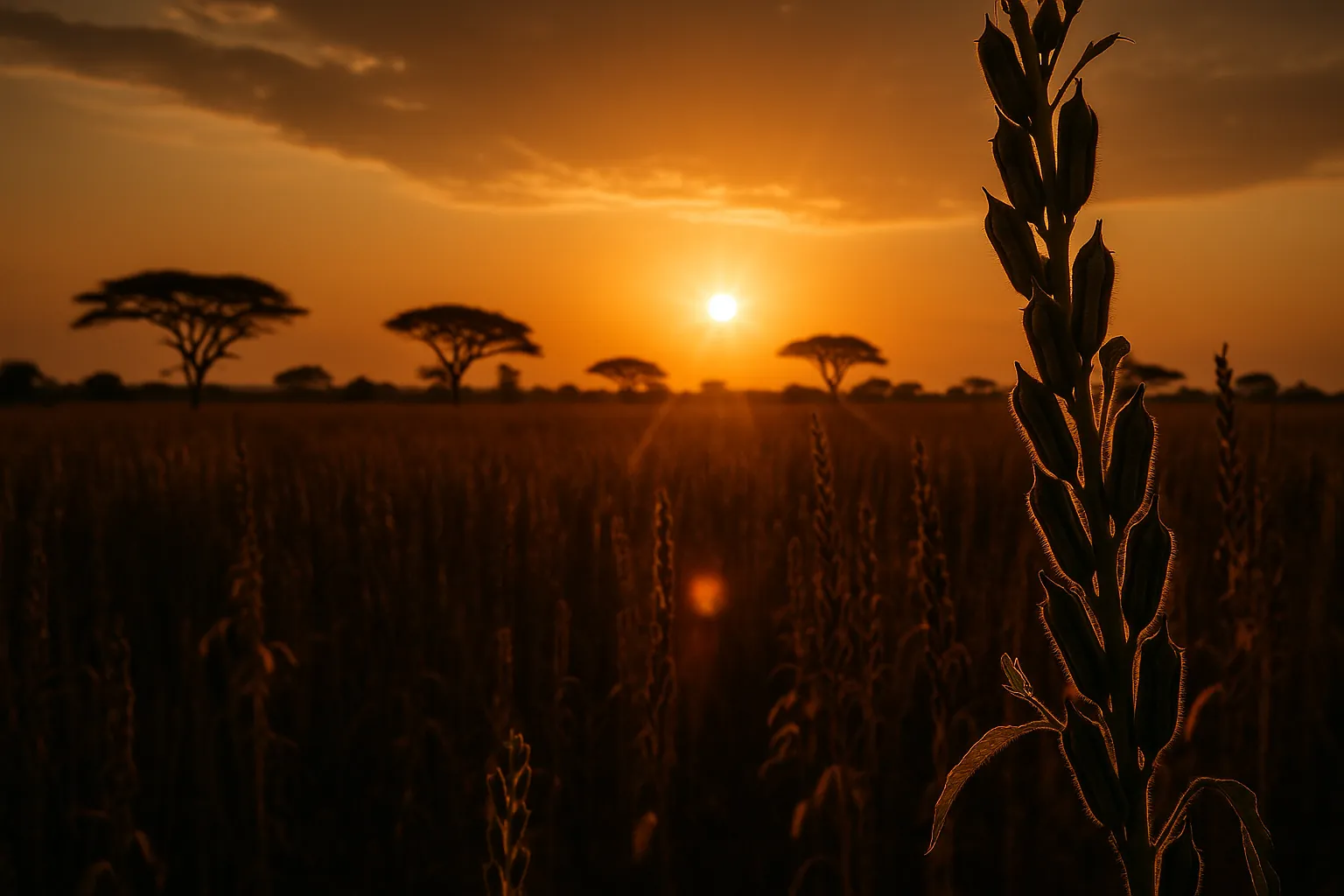
Sesame grows across a warm, dry belt running through sub-Saharan Africa, South and Southeast Asia, parts of China and pockets of Latin America. It tolerates thin soils and short rains, which is precisely why it tends to be farmed on a few acres at a time rather than on large mechanised estates. In most seasons the same names sit near the top of the production tables, and the order among them turns on rainfall more than on anything a ministry decides.
- The consistent heavyweights — Sudan, India, Myanmar, Tanzania, Nigeria, China and Ethiopia appear near the top of global production in most seasons, in an order that reshuffles year to year.
- The substantial second group in Africa — Burkina Faso, Chad, Mali, Niger, South Sudan, Uganda, Mozambique and Somalia, several of which have grown their planted area considerably over the past decade.
- The rest of Asia — Pakistan, Bangladesh and Thailand grow meaningful crops, largely absorbed by domestic and regional demand.
- Latin America — Paraguay, Guatemala, Mexico and Brazil grow smaller but commercially important volumes, with Brazilian plantings expanding notably in recent seasons.
What characterises each origin's seed?
Sesame is not one product. Seed-coat colour, size, sweetness and oil content vary by origin and variety, and a buyer with a settled recipe is loyal to a profile rather than to a flag. These are the profiles the trade talks about, offered as neutral market context — none is our supply except the last.
- Sudan — Gadarif whitish has been a tahini benchmark for decades, alongside reddish types that go to crushing.
- Ethiopia — Humera-type seed is large, ivory and sweet, favoured in confectionery; Wollega types feed the crushing market.
- India — the full grade ladder, and above all hulled seed produced at a scale nobody else matches, which is why 'Indian hulled' functions as a global reference grade.
- Myanmar — black, brown and white types, with a substantial domestic and regional appetite for the crop alongside export flows.
- Nigeria — predominantly whitish and brown seed moving into oil, bakery and tahini channels.
- China — a serious grower in its own right, though domestic production has long been outpaced by domestic demand.
- Paraguay, Guatemala and Mexico — confectionery and bakery seed with long-standing links to the Japanese and North American markets.
- Tanzania — clean natural white seed with high oil content, harvested in the middle of the calendar year.
Which countries export the most sesame?
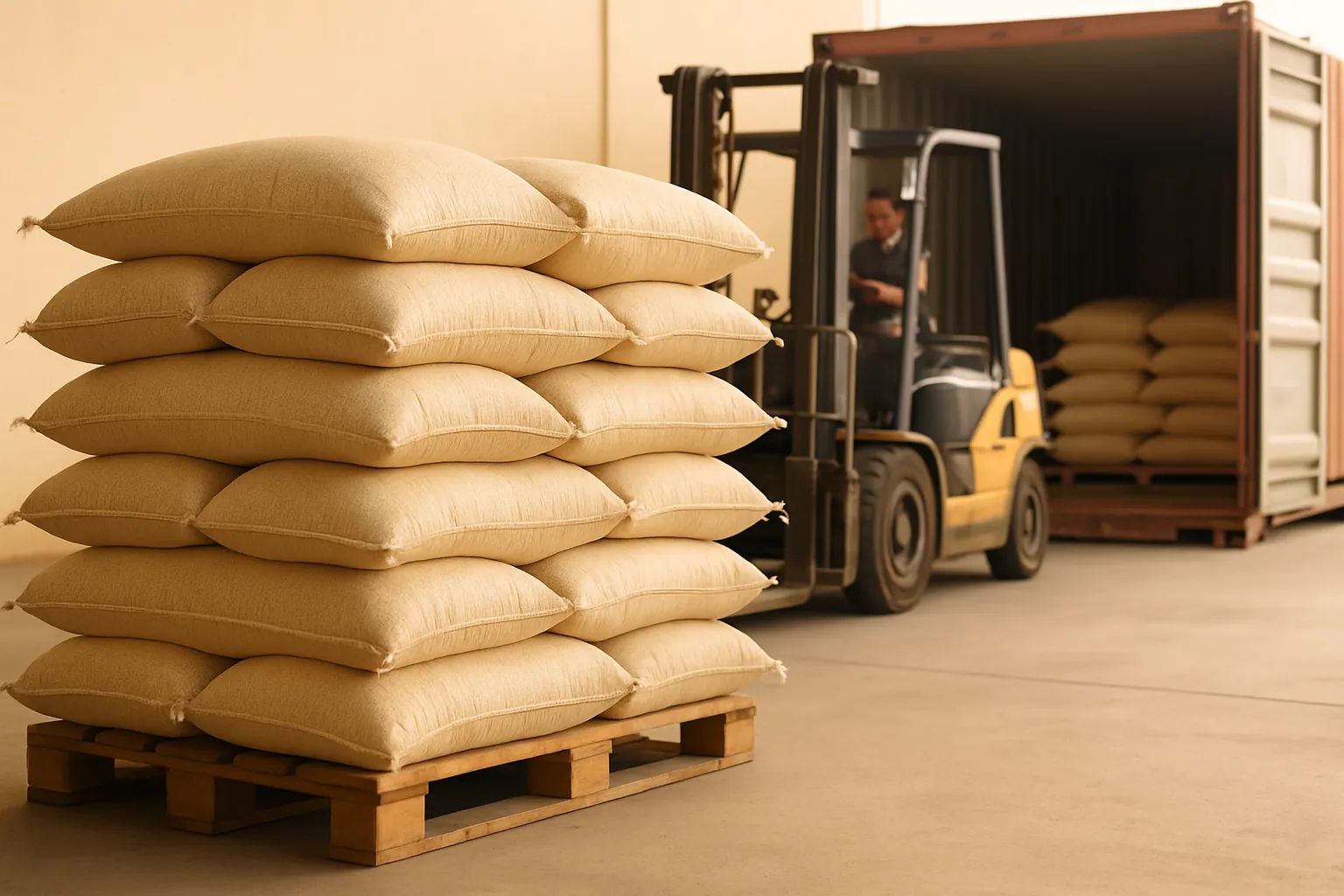
This is where the map stops matching the production table. A country that grows a great deal of sesame and eats, crushes or hulls most of it does not show up as a major seller. India processes enormous volumes for its own food industry before exporting, and China's crop disappears into its own mills. African origins, by contrast, grow far more sesame than their domestic markets absorb, so most of the crop is planted with an export container already in mind.
- African origins together move a large share of world export volume — Sudan, Nigeria, Tanzania, Ethiopia, Burkina Faso, Mozambique, Uganda, Chad, Mali and Niger among the recognised suppliers.
- India exports across the whole grade ladder and is the origin most buyers name first for hulled and sortex-cleaned seed.
- Myanmar's exportable surplus moves overwhelmingly into the Chinese market, a good deal of it overland rather than by sea.
- Latin American origins ship modest but high-value volumes into confectionery and premium bakery programmes.
- China, despite being a major grower, is a net buyer rather than a seller — a useful reminder that production size and export size are different questions.
Which countries import the most sesame?
Demand is more concentrated than supply, and each buying market wants something specific. Knowing which specification a market lives by is worth more to a seller than knowing its rank.
- China — the dominant single importer by volume, buying for oil crushing and food use. Its procurement pace sets the floor under prices at every origin, which is why a Tanzanian quote can move for reasons that have nothing to do with Tanzania.
- Japan — smaller in volume, most exacting in specification. Purity, cleanliness, uniform colour and documented food safety come before price, and much of the seed is roasted or pressed for sesame oil.
- Turkey — grinds tahini and halva at industrial scale and imports far more than it grows. Natural white and hulled tahini-grade seed, calibrated to established recipes.
- The wider Middle East — Israel, Saudi Arabia, the UAE, Lebanon, Jordan and Egypt all pull tahini-grade seed, usually against a recipe built around a particular origin profile.
- South Korea — steady food and oil demand, with quality expectations nearer the Japanese end of the scale than the bulk crushing end.
- The European Union — the Netherlands, Germany, Greece and Poland among the notable entry points, serving bakery, health-food and tahini manufacturing. The EU weighs documentation heaviest: pesticide-residue controls and salmonella screening decide entry at the border.
- The United States — hulled seed for bakery topping, plus a growing tahini and hummus category.
“A production table tells you where sesame grows. A trade table tells you where it goes. Buyers get into trouble when they read the first and plan against the second.”
- Joachim Mbwana, Sourcing Lead
Where does Tanzania fit on the map?
Tanzania is consistently among the largest sesame producers in Africa and a significant producer globally, with the crop grown rain-fed across Dodoma, Singida, Morogoro, Lindi and Mtwara and shipped through Dar es Salaam and Mtwara ports. But we would rather buyers judged the origin on the seed than on a placing in a table, because the placing changes with the rains and the seed does not.
- Oil content — the genuine Tanzanian calling card. Our natural white and sortex grades carry an oil content of 48 to 52 per cent, assayed per lot rather than quoted as an origin average, which is what a crusher is actually paying for.
- Natural white quality — clean whitish seed grading to the 99/1/1 convention, and sortex-cleaned to 99.95 per cent purity where the specification calls for it.
- Harvest timing — the Tanzanian crop is cut May to August, putting fresh seed on the water in the middle of the calendar year rather than at the same moment as the northern-hemisphere origins.
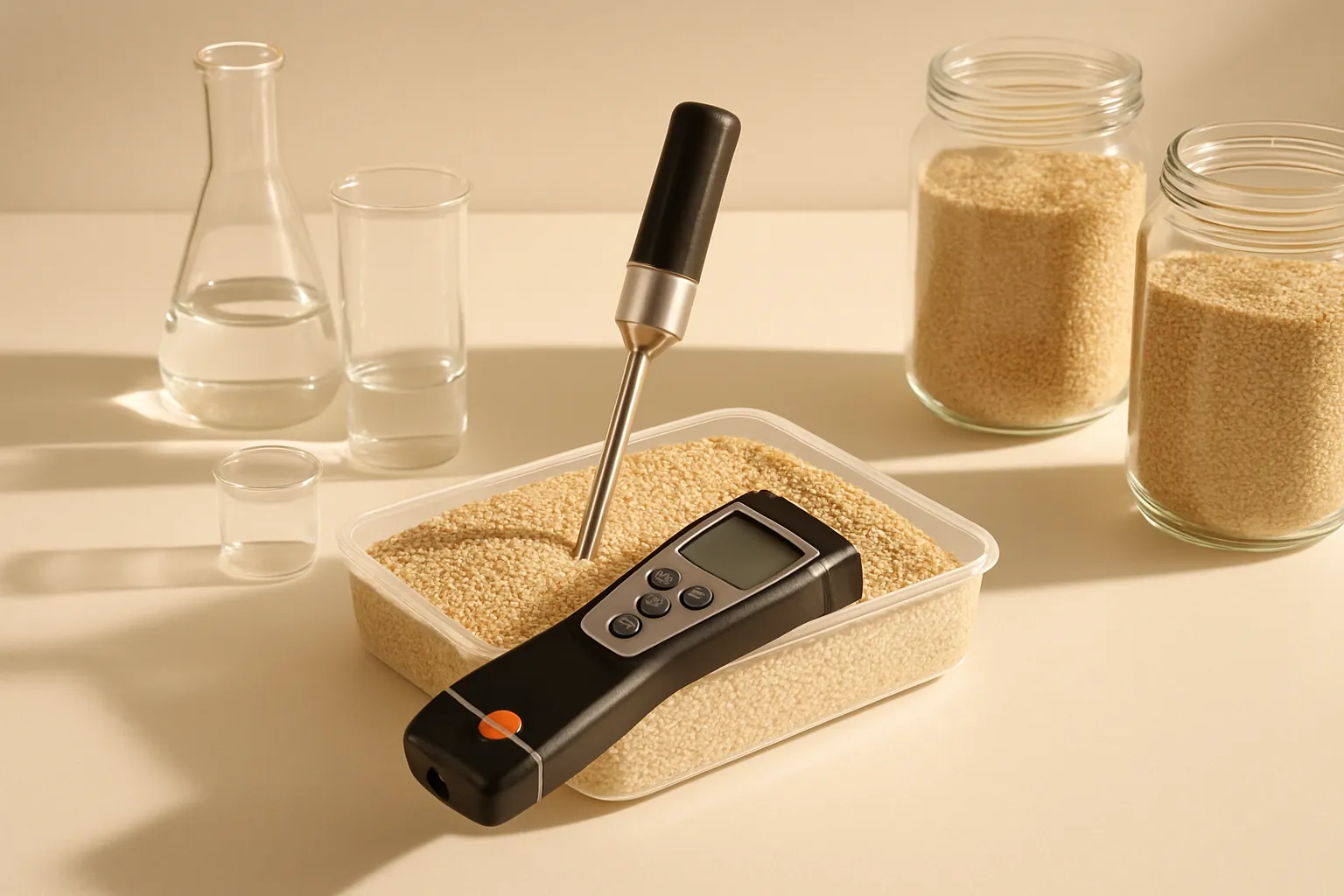
- Documented lots — TBS-certified processing, per-lot laboratory testing covering moisture (6 per cent maximum), FFA (2 per cent maximum) and food-safety parameters, and traceability back to the growing district.
- A stable export corridor — two working ports and a predictable documentation route, which matters more than buyers expect until a corridor somewhere else stops working.
The origin-by-origin comparison — how Tanzanian seed stacks up against India, Sudan and Ethiopia for a specific programme — is a separate piece, linked below.
Why do sesame rankings differ from source to source?
Because three separate things are being measured and none of them holds still. Production figures for a rain-fed smallholder crop are estimates, routinely revised once the season closes. Export and import statistics are reported at both ends of every shipment and rarely reconcile, since re-export and overland border trade blur the picture. And a country can slip several places in one season for weather alone. That is why this article groups origins qualitatively rather than publishing a numeric leaderboard: a tidy table of tonnages would look more authoritative and be less true. If you need firm figures, pull them from current-season sources — FAO production data, national customs statistics and trade-flow services such as ITC Trade Map — and date-stamp them.
Choosing a sesame seeds exporter, not just an origin
An origin tells you what the seed can be; the exporter decides what arrives. Two containers of Tanzanian natural white can differ on purity, oil and moisture because one exporter cleaned, sorted and tested the lot and the other shipped it as it came off the plains. Before comparing prices, ask any sesame exporter four things: which districts and which season's crop fill the container, whether a laboratory report for oil, FFA, moisture and aflatoxin travels with that specific lot, who processed it and to what standard, and which port and Incoterm the quote is built on. An exporter who answers all four in writing is quoting a specification; one who cannot is quoting a hope.
How buyers should use a market map
The practical value of knowing the landscape is not trivia; it is risk. Origins that look interchangeable on a price list stop being interchangeable in a crisis, and a programme sourcing from a single corridor carries a fragility no spreadsheet shows. The mature approach is to qualify one origin for the flagship product and a second for continuity, specify against numbers rather than country names, and ask any supplier which season's crop is actually filling the container.
Tell us the specification and destination and we will quote the Tanzanian side of that equation — natural white 99/1/1, sortex 99.95 per cent, hulled, oil-grade or organic — with the lot's oil, FFA and moisture results attached, usually within one business day.
Related reading
- Tanzanian sesame seeds exporter — wholesale supply- Grades, MOQ, testing and shipping in one place
- Tanzania vs India, Sudan & Ethiopia sesame- The origin-by-origin comparison
- Sesame seed grades and specs explained- What 99/1/1, sortex and hulled actually mean
- Natural White Sesame Seeds 99/1/1- The workhorse export grade
- Sortex Natural White Sesame 99.95%- For lines that cannot tolerate dark specks
- Request an FOB quote- Reply within one business day
Related reading
Leave a Comment
Your email address will not be published.