
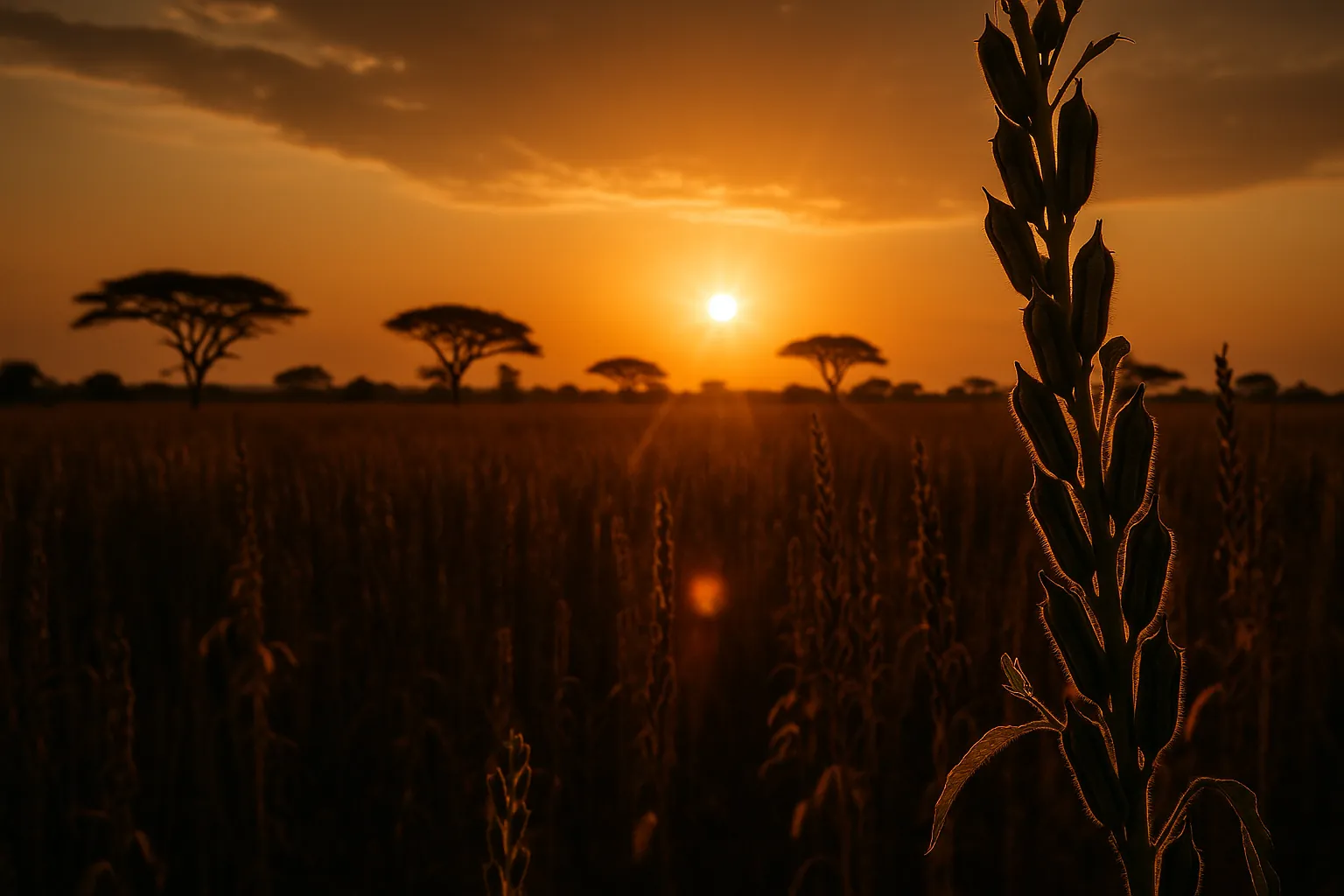
Yes, you can still buy Tanzanian sesame from the 2026 crop in the fourth quarter, but you are buying stored seed rather than fresh harvest. Farm auctions for the 2026/27 season opened on 8 May 2026, and since then the crop has passed from cooperative warehouses to exporters and processors, who clean, sort and hold it until it ships. A late buyer should contract against a named lot with a recent laboratory report, not against the harvest date. The next fresh crop is unlikely to reach auction before about May 2027 if next year's calendar follows this one.
At a glance
- The 2026/27 Tanzanian sesame season opened with a TMX auction in Songwe on 8 May 2026.
- Reported farm-level auction prices in 2026 sat below the 2024/25 level. Commentary around the opening pointed to a well-supplied world market rather than a shortage.
- By October the crop is no longer in farmers' hands. What remains for shipment is seed already bought, cleaned and warehoused.
- For stored seed, the lab report date matters more than the harvest date. Moisture, FFA, insects and fumigation are the checks to insist on.
- Buyers who need cover into 2027 can split it: a container from 2026 stock now, and a forward contract against the 2027 crop.
What did the 2026 Tanzanian sesame season deliver?
Tanzanian sesame farmers sell through cooperative auctions run on the Tanzania Mercantile Exchange (TMX), and the published auction results are the best public record of how a season went. The figures below are market data: Tanzanian shillings per kilogram paid at farm level before statutory deductions. They are not export prices and they are not our prices.
- Opening auction, 8 May 2026, Songwe: 1,923 tonnes sold within hours to more than 10 companies, at Sh2,625 to Sh2,700 per kilogram and an average of Sh2,667.9, according to The Citizen.
- Tunduru, Ruvuma: the district's first auction of the season sold about 995 tonnes on TMX at an average of Sh2,477 per kilogram, reported on 22 May 2026.
- Season to mid-June: TMX had sold 8,665.6 tonnes of sesame worth Sh24.93 billion at Sh2,310 to Sh2,740 per kilogram, mostly from Songwe, Ruvuma, Tabora and Rukwa, The Guardian reported on 15 June 2026.
- Coast Region: a report published on 23 August 2026 said about 12,000 tonnes had sold across seven digital auctions run through the regional cooperative union, with the last auction clearing at Sh2,310 per kilogram.
The context matters as much as the numbers. Before the season opened, The Citizen reported that the average Tanzanian sesame price had fallen from Sh3,144 per kilogram in 2024/25 to Sh2,329 in 2025/26. It put the drop down to global oversupply, rising output in Brazil and Sudan, Chinese buyers stockpiling less aggressively, and higher freight and insurance costs. The 2026 auction range sits close to that lower level. We have not found a published national total for the full 2026/27 season, so we do not quote one.
Two cautions for reading these reports. Most of the early-season tonnage came from Songwe, Ruvuma, Tabora and Rukwa, while the lots we export are drawn from Dodoma, Singida, Morogoro, Lindi and Mtwara, so a regional auction result describes the market, not our supply. And an auction price for raw farm seed is a long way from an FOB price: cleaning losses, sortex, testing, bags, inland haulage and port charges all come between the two.
Where is the 2026 crop now?
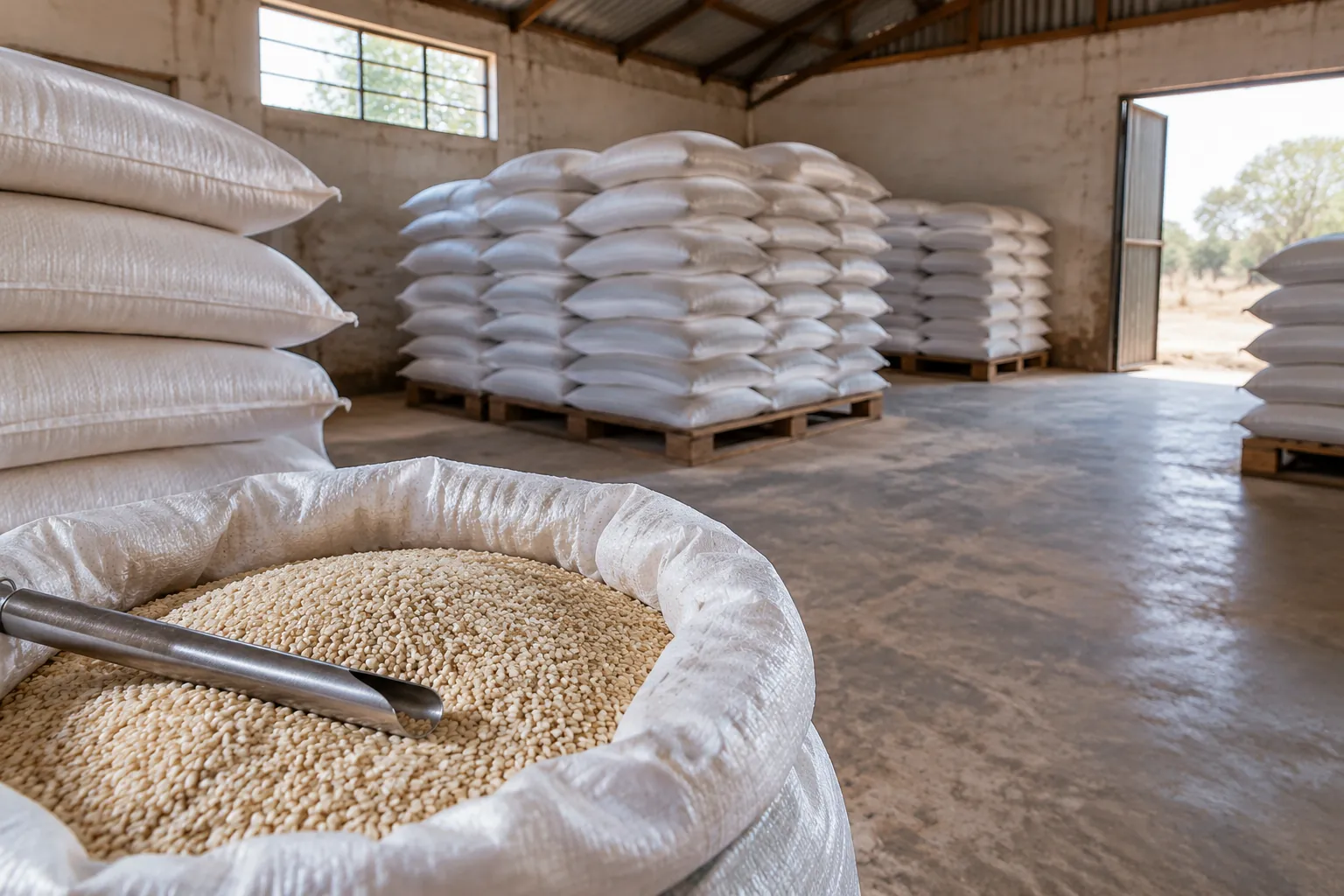
After the auctions, sesame moves out of cooperative warehouses and into exporters' and processors' stores. There it is cleaned to the 99/1/1 natural white convention, sortex-sorted for premium lots, hulled for bakery and tahini buyers, or kept as bold seed for crushers. By the fourth quarter, the question for a buyer is not when the harvest comes in but which cleaned lots are still unsold, how long they have been stored, and in what conditions.
We do not publish stock positions or prices. Availability by grade — natural white, sortex 99.95 per cent, hulled, oil-grade and natural brown — is confirmed per enquiry against a specific lot, with that lot's laboratory results attached.
What to check on late-season sesame
- A fresh sample. Ask for moisture and FFA results from a sample drawn this month, not the intake test from June. Moisture should still be 6 per cent or below and FFA 2 per cent or below as oleic.
- Storage conditions. Seed held in a ventilated warehouse, palletised off the floor and clear of walls keeps its condition far better than seed stacked on concrete.
- Insects and fumigation. Ask whether the lot has been fumigated, with what and when, and make sure the record travels with the documents your destination requires.
- Food-safety results against your market. Aflatoxin against your destination's limits and, for ready-to-eat use such as tahini or toppings, salmonella screening on the lot that ships.
- The crop year on paper. The certificate of origin, packing list and lab report should identify the 2026 crop, so your own auditors do not have to guess.
- Bag condition. Months in store can weaken woven PP bags; ask for rebagging before loading if the bags have been handled more than once.
Covering the gap to the 2027 crop
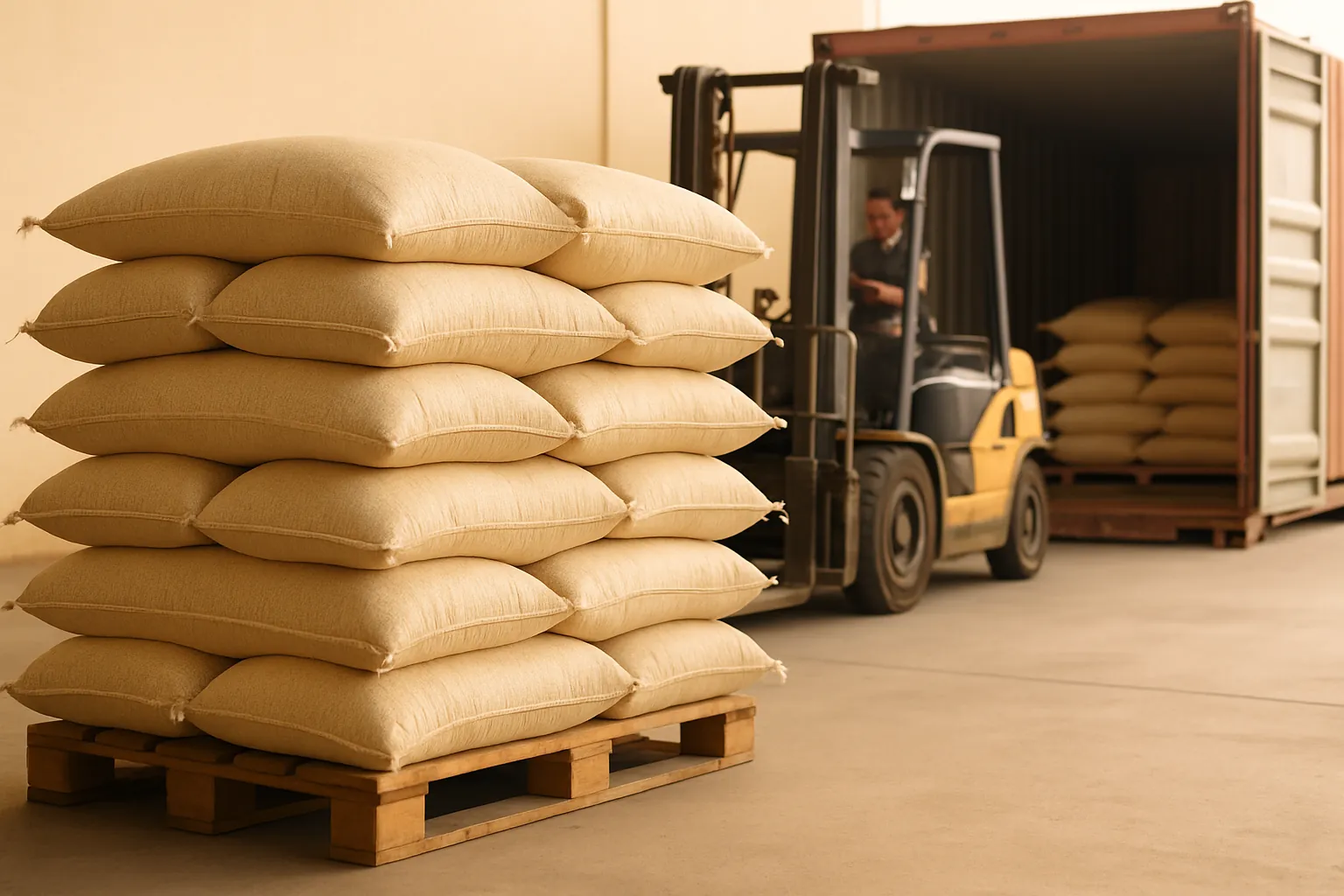
A buyer who needs continuous supply into the second half of 2027 has three practical options. Take a container from 2026 stock now, sized to last until new-crop seed can ship. Agree a forward contract against the 2027 crop, with the specification, test protocol and shipment window fixed in advance and the price settled nearer harvest. Or, for a new specification, start with a smaller trial shipment from current stock and lock in the full programme for 2027 once the trial lot has passed your intake checks. Our standard minimum is one 20-foot container of about 19 to 20 metric tons, FOB Dar es Salaam or Mtwara; the MOQ guide explains the trial route below that.
Send us the grade, volume, destination and the tests your market requires. We will tell you which 2026 lots match, send their current lab results, and say plainly if the seed you need would be better bought from the 2027 crop.
Related reading
- Tanzania sesame seeds exporter — wholesale supply- Grades, MOQ, testing and shipping in one place
- Sesame price trends 2026- What moves the price, and how to read a quote
- Sesame quality: FFA, moisture and aflatoxin- The lab numbers that decide a lot
- Sesame seeds wholesale MOQ explained- One container, and the trial route below it
- Natural White Sesame Seeds 99%- The workhorse export grade
- Sortex Natural White Sesame 99.95%- Optically cleaned for strict intake QC
Sources
- The Citizen — Tanzania bets on quality in tough sesame market- 7 May 2026 · season averages and price drivers
- The Citizen — Strong start for Songwe sesame farmers- 9 May 2026 · opening auction of the 2026/27 season
- The Respondents — Tunduru sesame farmers' first auction- 22 May 2026 · Tunduru volume and average price
- The Guardian (IPP Media) — TMX earnings report- 15 June 2026 · season-to-date sesame volume and price range
- Mkulima Jembe — Coast Region digital sesame auctions- 23 August 2026 · Swahili-language report
Related reading
Leave a Comment
Your email address will not be published.